

Frank Berry Standish and Alfred Ernest Lyttelton Preece
Frank Berry Standish
born 10 March 1860 - died 30 August 1944
Frank Berry Standish was born in Chelsea, London the son of Mary Elizabeth Standish nee Berry and William Standish a Yorkshire born artist who specialised in animal painting. His grandfather John Standish (c.1767-1850) was also an artist. In 1861 Frank Standish was living at 46 Stanley Street, Chelsea with his parents and in 1871 with his father at 10 Downs Park Road, West Hackney, London. His mother had died in 1868 aged 51 years (refer FreeBMD - Chelsea 1a 132). In 1880 his father then aged 65 was sentenced to five years penal servitude for robbery (refer - The Standard, Wednesday, October 20, 1880; pg. 3; Issue 17551).By 1880 Frank Berry Standish is living at "Longbeach" near Ashburton, New Zealand. The Wakanui Electoral Roll for that year shows his occupation as an artist. Also at Longbeach at this time was Frank Burgon Standish (1836-1923), a stockman, who may be a relative. In 1883 two paintings by Standish of draught horses were exhibited at Fishers in Hereford Street, Christchurch:
There is on view at Mr Fisher's, Hereford street, two very excellent specimens of animal painting by a local artist, Mr Standish. They are pictures of two of Mr Boag's celebrated draught horses. The painter has been exceedingly happy in both, and the result is highly creditable. The pictures have attracted great attention during the past few days.
Press, Volume XXXIX, Issue 5518, 26 May 1883, Page 4
In about 1885 he when into partnership with Alfred Preece as a photographer. In 1888 at the Holy Trinity Church, Christchurch he married Eleanor Gordon Cross, he was then aged 28 years and gave his occupation as an artist.
Marriage.
Standish— Cross.— On Sept. 11, at Holy Trinity Church, by the Rev. John Hoatson, Frank Berry Standish, of Christchurch, to Eleanor Gordon, eldest daughter of Fred. Cross, Esq., Christchurch.
The Star, Issue 6343, 14 September 1888, Page 2
A daughter Elaine Maude Standish was born on 4 July 1889 at Avonglade, Avonside, Christchurch.
The partnership with Alfred Preece was dissolved on 17 March 1890 and Frank Standish left Christchurch to live in California, his household effects were sold at auction in April:
180, Salisbury Street West,
Near Park Terrace.
Tuesday, 8th April 1890, at twelve noon. Under the esteemed favour of the positive orders of F. B. Standish, Esq., who is leaving the Colony, MESSES A. BEAUCHAMP & CO. will hold a perfectly unreserved SALE BY PUBLIC AUCTION, On the Premises, as above, of beautiful furniture and household effects. Valuable painting, choice gems of Works of art, curios, bric-a-brac, contained in a refined and well-appointed home, comprising -HALL - Linoleum, door mat, sheepskin and other mats, hallstand, hall lamp (duplex burner).
DINING-ROOM - Brussels carpet and rug, brass-top fender, steel irons, extension table (8 x 4), Austrian and other chairs, book- case. Singer's sewing machine. Lamp (circular wick), ornaments, oil paintings by well-known masters.
DRAWING-ROOM - Brussels carpet, Maori mat, fender, fire-irons, ash-pan, pier glass in walnut, Fish-stand, tray and flowers, curtains, mantel-drape, ornaments, pictures (after Landseer, Turner and others), water colours and drawings.
BEDROOMS - Half-tester bedstead in black and gold, Spring mattress, leather mattress and Bolster, elegant wash-stand and dressing table, double set ware, chest drawers, lace curtains, tapestry carpet (27 3/4), afghan dressing table, ornaments and recherché surroundings.
SERVANTS' ROOM - Bed, mattress, pillows, carpet washstand, dressing table, looking-glass, ware.
KITCHEN - Customary culinary utensils of all kinds, linoleum, meat safe, scales and weights, dinner, breakfast, tea and dessert service, portable boiler, garden tools, one man saw.
Terms Cash. No Reserve.
Every (missing word) must be sold.
A. Ayers. Auctioneer.
Star, Issue 6820, 7 April 1890, Page 2
Every (missing word) must be sold.
A. Ayers. Auctioneer.
Star, Issue 6820, 7 April 1890, Page 2
His wife and daughter followed in 1891. In 1900 the family were living in San Francisco where Frank Standish was employed as a newspaper artist. Ten years later the family were living in Berkeley, Alameda, California where he is employed as an advertising artist.
He died on 30 August 1944 aged 84 years at Alameda, California, his wife Eleanor died there on 18 April 1946.
For family details see - http://www.fergusontree.com/p253.htm#i5907
Brilliant Wedding.
Of Christchurch Interest. States the San Francisco "Examiner" of March 25:
One of the most brilliant weddings of the month took place at St. John's Presbyterian Church in Berkeley last evening, when Miss Elaine Standish, the attractive daughter of Mr and Mrs Frank B. Standish of Claremont, and grand-daughter of Mrs F. Cross, of Kent Lodge, Riccarton, became the bride of Dr Andrew Mhoon Massie in the presence of three hundred guests. Rev. George G. Eldredge, pastor of the church, officiated. A large reception to one hundred friends at the Standish home in Elmwood Park followed the ceremony at the church. The edifice was effectively decorated in artistic fashion with quantities of dainty pink Banksia roses, pink carnations, and ferns.
The bride was given into the keeping of her future husband by her father. She wore a handsome wedding gown of white satin, elaborated with shirring of Chantilly lace on the skirt and train. Her long wedding veil was arranged in Nell Brinkley effect, and a shower bouquet of lilies of the valley completed her costume. Miss Claudia Massie, sister of the bridegroom, was the maid of honour, and Miss Frances Ramsay and Miss Nellie Mahoney the two bridesmaids. Dr Edward Dowdle was best man, and Messrs Oswell Lawton, Charles Massie, Herbert Underwood, and Ned Hammer the ushers. Master James French officiated as ring bearer, wearing an Oliver Twist suit of white, while little Catherine Mills, in a dainty French frock of pink, as flower maiden, preceded the bridal party, scattering rose petals in the pathway.
Miss Massie, the maid of honour, wore a handsome gown of pink charmeuse in two shades of pink, with drapery of lace. A short veil of pink tulle was worn, and she carried a shower of pink bridesmaid roses.
Misses Ramsay and Mahoney, the bridesmaids, were gowned in pale blue taffeta, smartly draped with lace caught with clusters of pink baby roses. Mrs Standish, mother of the bride, wore a handsome costume of apricot charmeuse, made with a tunic of rose point lace, confined with a girdle of turquoise blue.
After an elaborate wedding supper at the Standish home, the young couple departed on a brief honeymoon trip. They will return to the bay district shortly, preparatory to sailing on the Chiyo Maru, on April 11, for the Orient. Their future home is to be at Shanghai, where Dr Massie plans to pursue his profession. The bride is an attractive and talented girl, a graduate from the University of California.
Of Christchurch Interest. States the San Francisco "Examiner" of March 25:
One of the most brilliant weddings of the month took place at St. John's Presbyterian Church in Berkeley last evening, when Miss Elaine Standish, the attractive daughter of Mr and Mrs Frank B. Standish of Claremont, and grand-daughter of Mrs F. Cross, of Kent Lodge, Riccarton, became the bride of Dr Andrew Mhoon Massie in the presence of three hundred guests. Rev. George G. Eldredge, pastor of the church, officiated. A large reception to one hundred friends at the Standish home in Elmwood Park followed the ceremony at the church. The edifice was effectively decorated in artistic fashion with quantities of dainty pink Banksia roses, pink carnations, and ferns.
The bride was given into the keeping of her future husband by her father. She wore a handsome wedding gown of white satin, elaborated with shirring of Chantilly lace on the skirt and train. Her long wedding veil was arranged in Nell Brinkley effect, and a shower bouquet of lilies of the valley completed her costume. Miss Claudia Massie, sister of the bridegroom, was the maid of honour, and Miss Frances Ramsay and Miss Nellie Mahoney the two bridesmaids. Dr Edward Dowdle was best man, and Messrs Oswell Lawton, Charles Massie, Herbert Underwood, and Ned Hammer the ushers. Master James French officiated as ring bearer, wearing an Oliver Twist suit of white, while little Catherine Mills, in a dainty French frock of pink, as flower maiden, preceded the bridal party, scattering rose petals in the pathway.
Miss Massie, the maid of honour, wore a handsome gown of pink charmeuse in two shades of pink, with drapery of lace. A short veil of pink tulle was worn, and she carried a shower of pink bridesmaid roses.
Misses Ramsay and Mahoney, the bridesmaids, were gowned in pale blue taffeta, smartly draped with lace caught with clusters of pink baby roses. Mrs Standish, mother of the bride, wore a handsome costume of apricot charmeuse, made with a tunic of rose point lace, confined with a girdle of turquoise blue.
After an elaborate wedding supper at the Standish home, the young couple departed on a brief honeymoon trip. They will return to the bay district shortly, preparatory to sailing on the Chiyo Maru, on April 11, for the Orient. Their future home is to be at Shanghai, where Dr Massie plans to pursue his profession. The bride is an attractive and talented girl, a graduate from the University of California.
Sun, Volume I, Issue 68, 27 April 1914, Page 4
Alfred Ernest Lyttelton Preece
(1863-1946)
 Alfred Preece
photo by Standish and Preece
Alfred Preece was born on 23 September 1863 the son of Hannah Ick ("Anna") and Thomas Preece, a draper of Lyttelton [4]. He was educated at Christ's College, 1877-1879. Charles Thomas Ick [1827-1885] his father former partner in the business Preece, Ick and Co., Auctioneers, Commission Agents and General Produce Merchants, may have been a relative. Ick who was twice Mayor of Christchurch had arrived at Port Chalmers on the "Lord Worsley" on 4 October 1858 with Thomas and Hannah Preece [5].(1863-1946)

photo by Standish and Preece

This picture, for which the “Star” is indebted to Mr A. E. Preece, shows how boys had to amuse themselves forty or fifty years ago. Mr Preece, when a youth, after leaving Christ’s College, was friendly with the sons of Mr Joynt [Thomas Ingram Joynt], the lawyer, and this was their velocipede. Mr Preece bought it for 12/6. There was not much comfort in riding it, but it was a thrilling novelty.
Star (Christchurch), Issue 19174, 13 September 1930, Page 23 (Supplement)
A slight knowledge of photography is now quite part of an English cyclist's education. In touring through the picturesque Old Country lanes he has many excellent opportunities of pursuing this fascinating art, especially since the introduction of the "dry plate" process. Cameras are now specially made for tourists, which only weigh a few pounds, and can be carried without difficulty on either bicycle or tricycle. While cycling through the Old Country, Mr A. E. Preece, of the Pioneer Club, Christchurch, procured one of the dry-plate Instantograph cameras, and took many interesting views during his tour, by means of which he is enabled to give his fellow wheelmen some idea of the beautiful rural scenery he passed through.
Star, Issue 5169, 26 November 1884, Page 3
A very interesting series of views is at present to be seen at the Cyclists' Exchange Colombo street, preparatory to their being placed in the Pioneer Bicycle Club-room. The photographs, which were taken by Mr A. E. Preece during the recent tour of the Bicycle Club to Akaroa, represent bits of scenery en route. The subjects appear to be well chosen considering the limited amount of time at the artist's disposal, and altogether form a very attractive collection.
Star, Issue 5641, 10 June 1886, Page 3
He was a member of the Photographic Section of the Philosophical Institute and a judge at their monthly exhibitions. His mother Anna died on 1 November 1894 at the residence of her son-in-law Isaac Gibbs, Merivale aged 70 years. His father died on 16 January 1898 at 39 Hereford Street, Linwood, Christchurch aged 78 years.
Mr and Mrs A. E. Preece, members of the Cyclists' Touring Club, left Christchurch yesterday morning on a tandem trip to Dunedin. They purpose making the journey by easy stages, and should the weather prove favourable they expect to arrive on Wednesday.
Cycling.—A telegram from Dunedin last night states:— "Mr and Mrs A. E. Preece, who left Christchurch last Sunday on tandem bicycle arrived Dunedin Wednesday afternoon. Most enjoyable trip."
Press, Volume LIV, Issue 9802, 11 August 1897, Page 5
Cycling.—A telegram from Dunedin last night states:— "Mr and Mrs A. E. Preece, who left Christchurch last Sunday on tandem bicycle arrived Dunedin Wednesday afternoon. Most enjoyable trip."
Press, Volume LIV, Issue 9803, 12 August 1897, Page 5
He later became a fruit grower at the Avalon Orchards, Heathcote. At the time of his death on 5 September 1946 he was an orchardist, living at Heathcote. His will was witnessed by Allan Bowles Cambridge, an artist and John Henry Fisher, a picture dealer. (A. B. Cambridge 1847-1911 was a Christchurch artist, portrait painter and colourer of photographs).


 Mr A. E. Preece, who has been elected a life member of the Canterbury Automobile Association. He is also a life member of the Pioneer Sports Club.
Press, Volume LXVIII, Issue 20666, 1 October 1932, Page 17
He married Elizabeth Lindsay Allan at St Matthew's Church, Dunedin on 16 January 1889.  Star, Issue 6449, 19 January 1889, Page 2


Mr A. E. Preece Established Many Records on the High Bicycle:
Mr A. E. Preece, who has just been elected a life member of the Canterbury Automobile Association, was a foundation member in 1903, when he owned a De Dion quadricycle. But before that he was an ardent cyclist and was, in fact, the first importer of the old high bicycles, on which, incidentally, he established many records as a track rider on a course now occupied by the lake in Victoria Park. The riders of these machines became very expert, but many a time they were bucked off when the “backbone” — the iron connection with the little wheel — came flying up from an unexpected bump. One of Mr Preece’s penny-farthing cycles, and a very graceful one, is in the Christchurch Museum, a former curator, Mr H. F. Waite, having rescued it from Mr Preece’s loft as a link with the past. Mr Preece, by the way, is also a life member of the Pioneer Sports Club, which was the oldest cycling club in Christchurch.
From conducting a cycling business, Mr Preece went on to photography for over twenty years, but, to use his own words, he was ”dying to get out into the sunshine,” and he found that as a fruitgrower in the ideal conditions of Heathcote he had chosen an outdoor occupation that brought a new feeling of tiredness and a new luxury in rest. Mr Preece does not engage very actively in the work of his orchards now, but he would not go back to an indoor life, especially at this season of the year, when blossom time over a wide acreage of nothing but stone fruits makes “ beauty in the heart break like a flower.”
From conducting a cycling business, Mr Preece went on to photography for over twenty years, but, to use his own words, he was ”dying to get out into the sunshine,” and he found that as a fruitgrower in the ideal conditions of Heathcote he had chosen an outdoor occupation that brought a new feeling of tiredness and a new luxury in rest. Mr Preece does not engage very actively in the work of his orchards now, but he would not go back to an indoor life, especially at this season of the year, when blossom time over a wide acreage of nothing but stone fruits makes “ beauty in the heart break like a flower.”
Star (Christchurch), Volume XLIV, Issue 573, 1 October 1932, Page 8

Press, Volume LXVIII, Issue 20666, 1 October 1932, Page 17
He married Elizabeth Lindsay Allan at St Matthew's Church, Dunedin on 16 January 1889.
 Star, Issue 6449, 19 January 1889, Page 2
their children were:
1. Dorothy Lindsay Preece born 16 June 1890 at Wairere, Merivale, Christchurch, died about 1967 aged 76 years, reg. 1967/35064, married Arthur Henry Robert Beresford Cooke, reg. 1930/987
2. Ernest Eric Preece born 2 August 1891 at Wairere, Merivale, Christchurch - 7th Reinforcements, Canterbury Infantry Battalion. Killed in Action at the Somme, 27 September 1916 aged 25.
3. Charles Alex Preece born 12 May 1893 at Wairere, Merivale, Christchurch, died 22 March 1924 aged 30 years, buried Bromley Cemetery, Christchurch, block 38 plot 129.
4. Marjorie Allan Preece born 20 January 1896 at Wairere, Merivale, Christchurch, married 17 April 1917 Christchurch, reg. 1917/2913, Henry Fawsit Skey.
1. Dorothy Lindsay Preece born 16 June 1890 at Wairere, Merivale, Christchurch, died about 1967 aged 76 years, reg. 1967/35064, married Arthur Henry Robert Beresford Cooke, reg. 1930/987
2. Ernest Eric Preece born 2 August 1891 at Wairere, Merivale, Christchurch - 7th Reinforcements, Canterbury Infantry Battalion. Killed in Action at the Somme, 27 September 1916 aged 25.
Private
Ernest Eric Preece (killed in action on September 27th) was the elder
son of Mr A. E. Preece, of Messrs Standish and Preece, photographers, of
Christchurch. He was educated at the Fendalton School and Mr W.
Wilson's private school, Cranmer square, and was engaged in
sheep-farming when he enlisted. He left with the Seventh Reinforcements,
and was 25 years of age at the time of his death.
Press, Volume LII, Issue 15721, 14 October 1916, Page 10
3. Charles Alex Preece born 12 May 1893 at Wairere, Merivale, Christchurch, died 22 March 1924 aged 30 years, buried Bromley Cemetery, Christchurch, block 38 plot 129.
4. Marjorie Allan Preece born 20 January 1896 at Wairere, Merivale, Christchurch, married 17 April 1917 Christchurch, reg. 1917/2913, Henry Fawsit Skey.
Henry
Fawsit Skey (1877-1947) was born in Dunedin and educated at Otago Boys
High School. He was an Entrance and Senior Scholar at the University of
Otago, graduating M.Sc. in 1899 with Honours in Physics. In May, 1899,
he began work at Dunedin as assistant to Farr in the magnetic survey of
New Zealand, which had begun in January. By 1907 this survey had taken
them throughout the country, including crossing the Haast Pass. Skey
surveyed the Chatham Islands with Kidson in March-April, 1908, and went
back in 1924 with the Otago Institute expedition. He remained with the
Magnetic Survey throughout his career and retired in 1940 (Farr, 1907;
Kidson, 1941; Baird, 1947; Healy. 1975) - The 1907 Expedition to the
Auckland and Campbell Islands, and An Unpublished Report by B. C. Aston.
New Zealand Electronic Text Centre.
issue:
Thora May Skey birth reg. 1925/10565
Ashes buried Woodlawn Memorial Gardens, 477 Linwood Avenue, Christchurch
Standish & Preece
[Frank Berry Standish and Alfred Ernest Lyttelton Preece]
1885 -1886 - 262 Montreal Street North, Christchurch
This partnership was formed about 1885. The studio was briefly [1] located at 262 Montreal Street North, Christchurch [2] before moving to 218 High Street in about October 1886 [3].
In March 1888 the previous studio located at 262 Montreal Street North was advertised for sale and removal, it consisted of a corrugated iron workshop, 16 feet by 24 feet.

Lyttelton Times, Volume LXIX, Issue 8435, 20 March 1888, Page 1

A cabinet card by Standish and Preece, 262 Montreal Street, North

A cabinet card by Standish and Preece, 262 Montreal Street, North

Old City Bridge was Photographed in 1884
Standish and Preece were Early Partners
How Standish and Preece came together in the business that still carries their name, although they are both out of it now, was the subject of an interesting little bit of early history in connection with an old photograph which appears on this page.
The photograph shows the old wooden bridge over the Avon at Gloucester Street. This photograph was taken by Standish, and the figure near the bridge is that of his partner, Mr A. E. Preece, of Christchurch, It was taken soon after they commenced in business in 1884.
“I was an enthusiastic amateur photographer,” said Mr Preece, in response to a question. “I was the first to have a bicycle business—in a small way—importing machines. I had been to the Old Country, and got an agency. Soon afterwards I was introduced to Standish, whose father was an artist. He had come to New Zealand as an artist, but there was not enough to do in his line—painting racehorses, and he went to Schuorup, [sic] the photographer. Then he suggested that if I would go shares with him he would do the work and we would divide the profits. We built a small studio near the North Belt. We did very well, and then took over the place in town, which was a business established by a Mr Lawrence. “Standish went to San Francisco after three or four years, and died there. Later I sold out to Mr Pearce, who is still conducting the business.”

Star (Christchurch), Issue 19168, 6 September 1930, Page 22 (Supplement)
Standish & Preece
[Frank Berry Standish and Alfred Ernest Lyttelton Preece]
from 1886 to March 1890 - 218 High Street, Christchurch
The High Street studio had previously been occupied by the photographers Gamble & Co.
who last advertised in the Star newspaper from this address about
September 1886. Before Gamble & Co. this was the location of Henry Chatteris' studio.
The partnership between Standish and Preece was dissolved on 17 March 1890, however the studio continued operate under this name.
 Press, Volume XLVII, Issue 7508, 25 March 1890, Page 1
Improved Photography. — Messrs Standish and Preece have been experimenting with the recently invented "colour sensitive" photographic dry plates, otherwise known as the isochromatic or orthochromatic plates. The purpose of these is not to obtain a picture in natural colours — an achievement as yet beyond the power of photography — but to render colours in the same order of intensity in which they are presented to the eye, so that the various shades shall appear in the photograph in the same order of relative lightness or darkness in which they appear in the natural object. The experiments made by Messrs Standish and Preece show that this is, to a great extent, secured by these plates. The object photographed was the cover of a child's picture-book, adorned with a rainbow-like figure, having bands, of scarlet, orange, yellow, light green, light blue, dark blue, purple and white, on a black ground. The picture taken by the colour sensitive plate rendered the intensity of the various colours with a considerable degree of faithfulness, the eight tints of the rainbow being represented by plainly distinct six shades in the photograph. A picture taken with an ordinary plate showed but three shades, the red, yellow, green and orange being blended in what was practically one dark mass. Messrs Standish and Preece have found that the amount of exposure necessary to obtain a photograph with the new plates is less than what is required when the old ones are used.
Photography. Messrs Standish and Preece have just completed a large photographic group of the medical staff of the Christchurch Hospital. The likenesses are excellent, the arrangement of the group very effective, and, altogether the photograph is a very fine specimen of work. They have also taken, to the order of the Canterbury Bowing Club, a photographic group of the crew which won the Junior Fours at the Lake Forsyth regatta, and another of E. W. G. Strange and P. C. Rose, the winners of the Junior Double Sculls at Akaroa, Kaiapoi, Lyttelton and Lake Forsyth. The portraits are very good, and the grouping effective.
 Press, Volume XLVII, Issue 7508, 25 March 1890, Page 1
Standish & Preece
[Alfred Ernest Lyttelton Preece]
March 1890 to September 1910 - 218 High Street, Christchurch
Improved Photography. — Messrs Standish and Preece have been experimenting with the recently invented "colour sensitive" photographic dry plates, otherwise known as the isochromatic or orthochromatic plates. The purpose of these is not to obtain a picture in natural colours — an achievement as yet beyond the power of photography — but to render colours in the same order of intensity in which they are presented to the eye, so that the various shades shall appear in the photograph in the same order of relative lightness or darkness in which they appear in the natural object. The experiments made by Messrs Standish and Preece show that this is, to a great extent, secured by these plates. The object photographed was the cover of a child's picture-book, adorned with a rainbow-like figure, having bands, of scarlet, orange, yellow, light green, light blue, dark blue, purple and white, on a black ground. The picture taken by the colour sensitive plate rendered the intensity of the various colours with a considerable degree of faithfulness, the eight tints of the rainbow being represented by plainly distinct six shades in the photograph. A picture taken with an ordinary plate showed but three shades, the red, yellow, green and orange being blended in what was practically one dark mass. Messrs Standish and Preece have found that the amount of exposure necessary to obtain a photograph with the new plates is less than what is required when the old ones are used.
Star, Issue 6936, 20 August 1890, Page 3
Photography. Messrs Standish and Preece have just completed a large photographic group of the medical staff of the Christchurch Hospital. The likenesses are excellent, the arrangement of the group very effective, and, altogether the photograph is a very fine specimen of work. They have also taken, to the order of the Canterbury Bowing Club, a photographic group of the crew which won the Junior Fours at the Lake Forsyth regatta, and another of E. W. G. Strange and P. C. Rose, the winners of the Junior Double Sculls at Akaroa, Kaiapoi, Lyttelton and Lake Forsyth. The portraits are very good, and the grouping effective.
Star, Issue 7095, 21 February 1891, Page 3
Artistic. The latest development in photography is the mat-surface photograph produced by Messrs Standish and Preece, under the name of "Platinette." The pictures possess a peculiar softness and delicacy of tone, and though beautifully clear, have nothing of the hard metallic appearance so common to ordinary photographs.
Photographic. - Messrs Standish and Preece, finding their present accommodation inadequate, are calling tenders for extensive additions and alterations to their photographic studio in High street.


Star, Issue 7270, 30 April 1892, Page 3
Photographic. - Messrs Standish and Preece, finding their present accommodation inadequate, are calling tenders for extensive additions and alterations to their photographic studio in High street.
Star, Issue 7326, 5 July 1892, Page 3
The War Correspondent. Messrs Standish and Preece have been successful in securing a small, but very fine, series of photographic portraits of Mr Frederic Villiers, the famous war correspondent. One of the fall-length pictures is exceedingly characteristic, and will form a valuable memento of our visitor. The pictures will be placed on view in the course of a few days.
Star, Issue 5336, 14 August 1895, Page 3
At the Industrial Exhibition of 1895
The exhibits of photography show that the art has attained a high stage of development in Christchurch. More charming portraits than the "platinettes" of Messrs Standish and Preece, the Christchurch photographers to Lord Glasgow, it is impossible to imagine. Some are taken with the Rembrandt light, others are delicately tinted. Several fine handfinished bromide enlargements are included in Messrs Standish and Preece's handsome case.
The exhibits of photography show that the art has attained a high stage of development in Christchurch. More charming portraits than the "platinettes" of Messrs Standish and Preece, the Christchurch photographers to Lord Glasgow, it is impossible to imagine. Some are taken with the Rembrandt light, others are delicately tinted. Several fine handfinished bromide enlargements are included in Messrs Standish and Preece's handsome case.
Star, Issue 5359, 10 September 1895, Page 4
Photographs of the Governor.—Just before leaving for the levee on Monday his Excellency the Governor accorded Messrs Standish and Preece a sitting at Elmwood, at which some very satisfactory pictures were obtained of his Excellency, Lady Ranfurly and suite. The photographs will shortly appear in our contemporary the Weekly Press and Referee.
Press, Volume LIV, Issue 9880, 10 November 1897, Page 5

Akaroa Mail and Banks Peninsula Advertiser, Volume XLIV, Issue 2271, 31 May 1898, Page 3
In 1898 Standish and Preece purchased the negatives of Charles Henry Manning.

The Royal Party at Te Koraha, Christchurch
by Standish and Preece
by Standish and Preece
2. Captain Osborne, 1st Australian Horse
3. the Hon. C. Hill-Trevor
4. Sir John Anderson, M.A., K.C.M.G., the Duke's Private Secretary for Official Business
5. Lieut.-Col. Sir Arthur Bigge, the Duke's Private Secretary for Personal Affairs
6. Captain Viscount Henry William Crichton, A.D.C.
7. the Hon. Derek Keppel, M.V.O., Equerry to the Duke
8. H.R.H. the Duchess of Cornwall and York
9. the Countess of Ranfurly
10. H.R.H. the Duke of Cornwall and York, K.G., K.T., K.P., G.C.M.G., G.C.V.O.
11. his Excellency the Earl of Ranfurly, G.C.M.G., the Governor of New Zealand
12. the Duke of Roxburghe, A.D.C.
13. his Serene Highness Prince Alexander of Teck, C.V.O., A.D.C.
14. Lieut-Col. Byron (Queensland), Australian Artillery, extra A.D.C.
15. Mr Sydney Prior Hall, Artist of "The Graphic"
16. Major James Henry Bor, R.M.A., C.M.G., A.D.C.
17. Dr. Alan Reeve Manby.
Sitting
Sitting
18. Commander Sir Charles Cust, Bart., R.N., M.V.O., Equerry to the Duke
19. Sir Donald Mackenzie Wallace, K.C.I.E., Assistant Private Secretary and Official Historian
20. Chevalier Edoardo de Martino, Official Marine Artist
21. Lord Wenlock, Chief of the Staff
22. Lady Mary Lygon, Lady-in-Waiting
23. Captain Alexander, A.D.C. to his Excellency the Governor of New Zealand.

 Standish and Preece (Alfred Ernest Preece). Photographers, 218 High Street, Christchurch.
This extensive business was established by the present proprietor in conjunction with his late partner, Mr. Standish, in 1885. The latter retired from the firm in 1901. Mr Preece, who was born in the Colony, was educated at Christ's College, and learned the rudiments of his profession in Birmingham, England. Subsequently, although trained for a clerk, he adopted photography from his love of the art. The work undertaken by the firm consists chiefly of portraits and groups, although all classes of pictures are executed to order. The premises are very
 centrally situated; entering from the busy thoroughfare, the visitor is attracted towards splendid specimens of the firm's handiwork on show in the vestibule. There are many striking portraits of well-known faces and several very excellently finished family groups tastefully arranged in the various cases. An ascent to the first floor by a handsome staircase leads to elegantly furnished waiting-rooms and to the studio on the second floor. The latter is large and thoroughly well appointed. The firm were photographers by special appointment to the Earl of Glasgow, and have been honoured with a similar appointment from the Earl of Ranfurly, the present Governor.
Messrs Standish and Preece have also had the patronage of their Royal Highnesses the Prince and Princess of Wales.
Cyclopedia of New Zealand, Canterbury edition. Vol. 3, pages 287 and 288.
Published by the Cyclopedia Company at 153 Manchester Street, Christchurch in 1903.


Cyclopedia of New Zealand, Canterbury edition. Vol. 3, pages 287 and 288.
Published by the Cyclopedia Company at 153 Manchester Street, Christchurch in 1903.
Standish & Preece
[Alfred Ernest Lyttelton Preece]
from September 1910 - 244 High Street, Christchurch


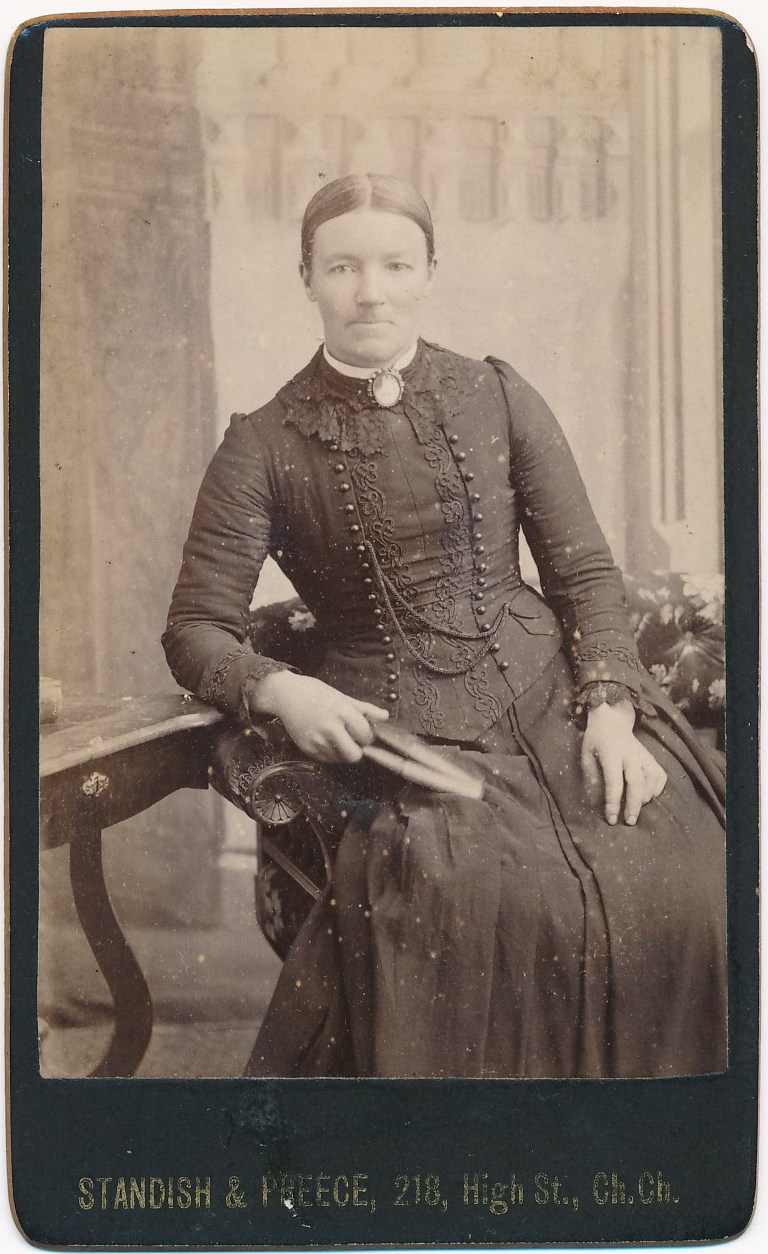


unknown woman photographed by Standish and Preece
cabinet card backing missing, blind stamped " Standish and Preece"
[purchased July 2023]


unknown woman
Samuel McMurray Album
[purchased 5 October 2024]


[purchased October 2025]

[purchased October 2025]


above cabinet card courtesy of The Laurence Eagle Collection


above cabinet card courtesy of The Laurence Eagle Collection


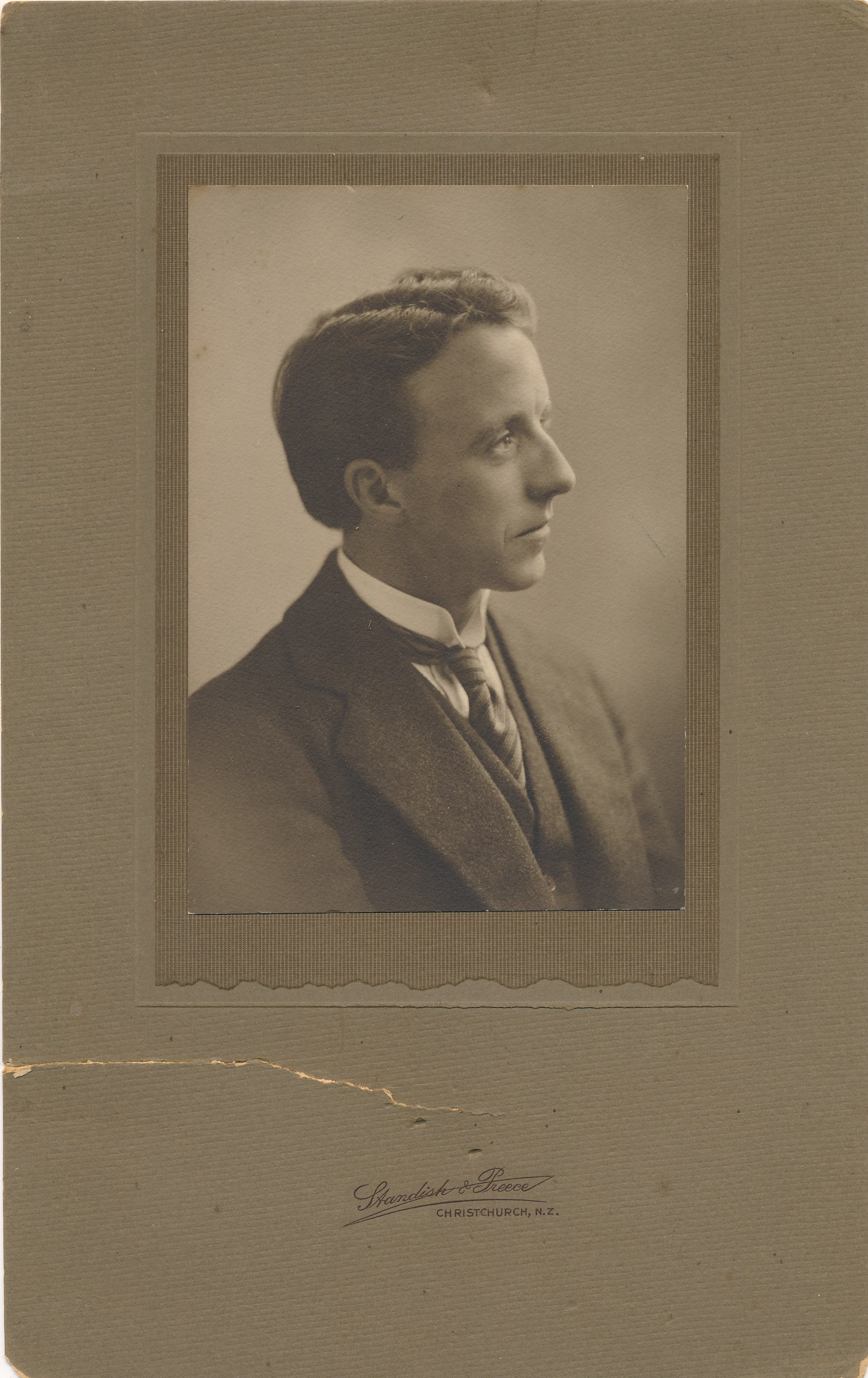
[purchased May 2022]


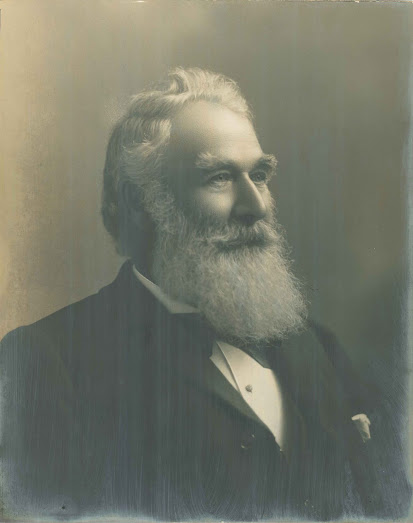
 above: portraits by Standish and Preece of an unknown couple


 above: portraits by Standish and Preece of an unknown couple


"Lovingly Yours Paul"
20 April 1911.


"Rochfort Sons"
taken in 1913
Frank aged 24, Henry aged 21 and Walter aged 23
"Walter made the supreme sacrifice - somewhere in France - June 18th 1917"
"Mother's sister Polly's 3 boys"
[purchased July 2024]
 above - marriage of Violet Catherine Perry to James Wilfred Swaney in 1914.
above and below,Wedding photographs of William James Harper Carpenter and Maud Henderson Walker, photographed by Standish and Preece 1914
[purchased July 2022]
William James Harper Carpenter and Maud Henderson Walker, married 24 June 1913 St Andrew's Presbyterian Church, Christchurch.


reverse inscription "Alison 9 months"
by Standish and Preece, Christchurch
[purchased July 2022]
Alison Maud Carpenter the daughter of William James Harper Carpenter and Maud Henderson Walker, born 28 March 1914, married 14 June 1939 Knox Church, Dannevirke, George Stevenson.


by Standish and Preece, purchased December 2021.


Alfred Alan Hasell, born October 1898, Christchurch, died 17 October 1970, Christchurch married 14 November 1923, Ivy Lois Spence died 11 July 1978, Christchurch
[purchased 18 July 2020]


[purchased May 2022]

unknown child by Standish and Preece
[purchased May 2022]

Reverse inscription " 'Sonny' Stan Porteous "Jnr" 1952?"
by Standish and Preece, Christchurch
[purchased November 2020]
 Standish & Preece photo of Richard John Seddon.
Children's Patriotic Pantomime
photographs by Standish and Preece
postcards published by Smith & Anthony Limited
probably about December 1915
 Maids of Honour
 Ladies and Gentlemen of the Court
 Jesters
 Gipsy Girls and Boys
 Gipsy Girls
 Fairy Queen and Attendant Fairies
 Puppet Group
 Group of Principals
  Gavotte
 Fairies
 Summer
 Spring

A. E. Preece, photographer and cycle dealer
(By W. J. A. Brittenden)
At all events in 1884 he sailed in the large steamer Doric (4744 tons) for England where he ordered stock from Hickling and Son, cycle manufacturers, Maidenhead. He also bought a 52- inch “Pilot” ordinary (“penny-farthing”) for himself together with a “King of the Road” cycle lamp from Messrs Lucas and Sons. He joined the Cyclists’ Touring Club and cycled from Birmingham, where he had spent some time visiting factories, down through Coventry to Worcester and on to the Severn River. After staying with various relatives in the area (many of them with pedagogic or clerical interests) he cycled through Oxford to London to catch the Aorangi (4163 tons, Captain Turpin) to return to New Zealand.
Camera bought
While he was in Birmingham, Ernest Preece purchased an “Instantograph” half- plate camera from Lancaster and Son, complete with tripod, plates and chemicals, for four guineas, if he paid the current price. Mr Frank Pearce, who eventually became “Standish and Preece”, acquired this camera from his former employer. He tells me its chief feature was a large aperture with a cover fitted with four knobs. A rubber band was attached to one of these knobs according to the exposure-time required the shutter was the shutter was released and the rubber band did the rest! And they still took good pictures with it.After a little less than four months in England, Preece returned to Christchurch with new ideas for the following year (1885) he entered partnership with Standish as a photographer. For the first year or two their premises were in Montreal Street just south of the North Belt. Later, Preece was to refer to his “learning the rudiments of his profession in Birmingham.” He spent eight whole days in Birmingham with a camera.
When he sold out his cycle exchange is not clear but his shop is not listed in the directory for 1878 nor yet again in the 1885-86 edition.
This inquiry began with the publishing of a photograph of “Prima Domus,” the first bach, or shack, on the New Brighton beach. Mr Pearce remembers Mr Preece referring to it as “the boatshed” as it may well have been after it was replaced by a substantially built holiday home which still stands today, scarcely recognisable. The veranda has been removed and the house no longer stands on piles high above ground level but it is in remarkably good condition. It is not impossible for the original bach to have been, in fact, a boathouse (Preece was interested in the river and, later, had quite an elaborate boatshed on his … missing text … summer of 1884-85, he was able to indulge his interest in his two hobbies, photography and cycling. The four photographs I have of this period strongly suggest that he rode a tricycle to New Brighton to avoid damage to his camera and plates from the tumbles almost inevitable when riding an ordinary cycle — and especially when on a rough road.
There is strong evidence to suggest that the figures in the original photograph were those of Messrs Myhre (sitting) and Parker (standing).
Ernest Preece — there was only one — owned the well- known High Street business for many years, his partner, having withdrawn in 1891.
Mr Preece sold out to Mr Pearce after World War II to take up the “Avalon” orchard in Port Hills Road where he died on September 5, 1946, aged 83 years.
The last word must be one of regret that “Prima Domus” is no more. Built on Marine Parade between Beresford and Hood streets it appears to have been demolished just a few years ago when a car park was made on the south of the Esplanade Hotel.


Holiday house
The Preece holiday house (the subject of an article on February 12) seems to have been located at 258 Marine Parade (originally Beach Road).Part of the original 150 acres granted to Joseph Harrop Hopkins (a well-known Woolston identity) for £300 on November 7, 1872, it was bounded by high water on the east, what was to become Seaview Road on the north and Elizabeth (Rodney Street) in the south. On the west the boundary was apparently what is now Union Street and the original course of the Avon before the cut was made. With Hopkins in financial difficulties, this 65-acre block came into the hands of George Oram of Governor’s Bay, a member of the well-known hotel owning family, in 1875. On his death on April 13, 1876, the land was transferred to his widow, Louise Sophia who, the following year began to sell off half-acre sections.
On July 21, 1877, Alfred Ernest Lyttelton Preece, a minor (he was still at Christ’s College that year) purchased Lot 20 of Rural Section 15836, an area of two roods 12 perches, for £2 l0s. On January 6, 1889, Preece married Lizzie Lindsay Allan whom he had met on shipboard while returning to New Zealand in 1884 and on March 8, he transferred the New Brighton section with the pleasant holiday house (where they had spent their honeymoon), to his bride. She sold the property in 1911 to George Stockdill, retired farmer. A later owner was Mr John Noble, headmaster and well-known brass band conductor.
Between 1877 and 1884 - but nearer the earlier date - Ernest Preece had put up, or transported to New Brighton (it may well have been a former boathouse) the “shack” or bach shown in “The Press” on February 12. This he called Prima Domus, the “first house” in the foreshore but not, clearly, the first habitation in New Brighton, since Hopkins had built an 11-room boarding house (“The Villa”), near the river, on the north side of Seaview Road, in 1873 and his 14-roomed New Brighton Hotel was licensed in April, 1874. By 1884 there were, in fact, 16 holiday or permanent homes (of which Preece’s was one) and two stores in New Brighton.
The second bach, which the Preeces let through the agency of Wyatt the storekeeper, has lost its veranda and no longer stands so high above the surrounding land. The low-lying land round about has been filled in to a depth of four feet according to the present owners, Mr and Mrs D. R. Cavangh, who have found a layer of surface rubbish at … missing text … are within the wall of the sunporch which has been added. The door at the northern end has been made into a window and the chimney, not now visible from the road, is in the same position as shown in the 1896 photograph. The gables are of similar angle and the houses of comparable size.
The only puzzle is the absence of any signs of the former finials. But there is no doubt that 258 Marine Parade is Prima Domus, Mark II. ‘From information received,” as the police say, I had expected to find it much nearer the Esplanade Hotel. It was Mr P. D. Dunbar who suggested 258 as a distinct possibility and Mr Cavanagh who linked A. E. Preece with earlier ownership of the property. I am grateful to these two men for helping to solve a problem which has puzzled me for three months. I should also like to thank Mrs and Miss Skey, daughter and granddaughter, respectively, of A. E. Preece and Mr Albert Hedger for their kind assistance.


Obituary
Thomas Preece
Another old and respected colonist passed away rather suddenly yesterday in the person of Mr Thomas Preece. The deceased gentleman, whose age was seventy-eight years, had been in fairly good health almost up to the time of his death, but early yesterday morning he was taken ill and died within a very short time of failure of the heart's action.Thomas Preece
Mr Preece was born in Worcester, England, and came to the colony by the first direct steamer, the Lord Worsley, in 1858, and first settled in Lyttelton. After being there for a few years, he removed to Christchurch and carried on an auctioneering and produce business on the site of the premises at present occupied by Messrs Tonks, Norton and Co.
About fourteen years ago he sold out his business, and since then he has led a retired life. Three years ago he paid a visit to his native land, on the death of his wife, and returned much unproved in health.
Although Mr Preece never took any active port in politics, being of a retiring nature, he was a man of liberal mind and did a good deal for his adopted country. He was amongst the earliest Freemasons here, and for some years held a prominent position in the Craft.
Mr Preece, of Messrs Standish and Preece, is the only son, and Mrs Isaac Gibbs the only daughter. The funeral will leave Mr Gibbs's residence, Papanui Road, for the Papanui Churchyard, at 4 p.m. to-day.
Star, Issue 6079, 17 January 1898
 F. Nelson Robinson, Frances A. Robinson nee Hamilton, Frank V. H. and Frances H. Robinson circa 1891
by Standish & Preece
[photograph contributed]

by Standish & Preece
[photograph contributed]
[1] They advertised in the Star from this address from 20 September 1886 to 2 October 1886
[2] Star (Christchurch), Issue 5728, 20 September 1886, Page 2
[3] Press, Volume XLIII, Issue 6570, 13 October 1886, Page 1
[4] Marriage: 9 Apr 1845 St Helen, Sefton, Lancs.
Thomas Preece - Full, Schoolmaster, Bachelor, Great Crosby, Sephton
Hannah Ick - Minor, Spinster, Bockleton, County of Worcester
Groom's Father: Thomas Preece, Farmer
Bride's Father: James Ick, Farmer
Witness: Richard Meredith; Jane Ick
Married by Licence by: R. Walker Offcg. Minister
Register: Marriages 1837 - 1864, Page 58, Entry 116
Source: LDS Film 1657555
[5] Otago Witness, Volume 06, Issue 358, 9 October 1858, Page 5Thomas Preece - Full, Schoolmaster, Bachelor, Great Crosby, Sephton
Hannah Ick - Minor, Spinster, Bockleton, County of Worcester
Groom's Father: Thomas Preece, Farmer
Bride's Father: James Ick, Farmer
Witness: Richard Meredith; Jane Ick
Married by Licence by: R. Walker Offcg. Minister
Register: Marriages 1837 - 1864, Page 58, Entry 116
Source: LDS Film 1657555

3 comments:
Curios what part of the Preece family is still around? Also how to get a hold of them. Just so happens to be my last name, there was a William Henry from my family, Family origin was Welsh, and family was Minors.
Even more weird now is I'm a Photographer, I actually kinda sign my name same way as lettering in logo. I'm very curious to find out more.
I brought Standish and Preece in January 1981 from Rex Stace and Trevor Fleming who brought it from Frank Pearce in 1952 , I sold it to John Hunter in 1986 I still have camera given to Mr Preece by Herbert Ponting used on the expedition to Antartica in 1912 and I still have a Century glass plate camera on display in the Canterbury museum.
Nigel Tod former owner
My grandfather Charles August Myhre is the figure in the picture taken at AE Preece's 'boatshed'. I have quite a few pictures of the Pioneer Cycle Club members curtesy of the Ch-Ch library.
By coincidence, an aunt of my wife is Jean Nicholls nee Ponting. Herbert Ponting was her great uncle.
Any other pictures by Preece gratefully received.
Phil Myhre
Auckland
Post a Comment